
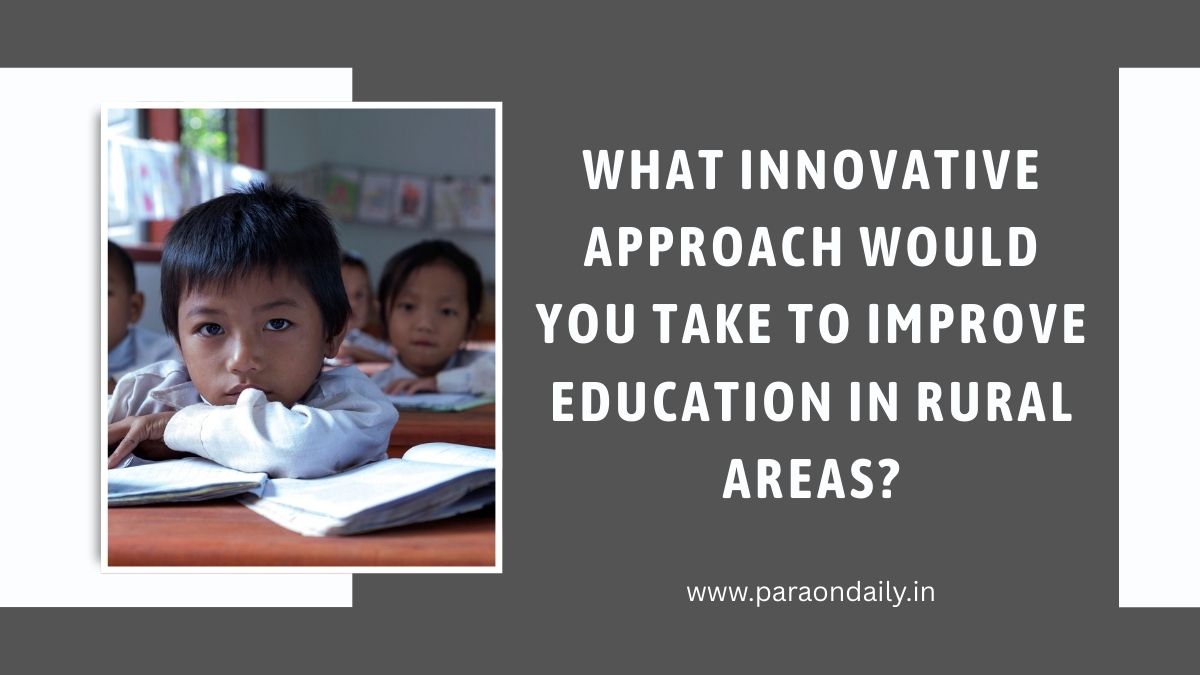
Education is the foundation of a strong society, yet many rural communities still struggle to access quality learning opportunities. When people ask, “what innovative approach would you take to improve education in rural areas?”, the answer goes beyond simply building more schools. It requires creativity, technology, community involvement, and practical solutions that work even where resources are limited. Rural students often face challenges such as teacher shortages, lack of digital tools, and long travel distances to school. However, these barriers also create space for fresh ideas that can reshape how education is delivered. By blending modern technology with local knowledge, we can design systems that are both effective and sustainable.
Let’s explore a few innovative approaches that can realistically transform rural education and create brighter futures for millions of learners.
What Innovative Approach Would You Take to Improve Education in Rural Areas in 150 Words
One innovative approach to improving rural education is the use of mobile smart classrooms. These are buses or vans equipped with tablets, internet access, digital boards, and interactive learning tools. Instead of expecting students to travel far distances, the classroom comes directly to them — almost like a food truck, but serving knowledge instead of snacks.
Mobile classrooms help bridge the infrastructure gap quickly and cost-effectively. Governments and NGOs in several countries have already reported higher attendance rates when mobile learning units visit villages regularly. Students also gain exposure to digital literacy, a skill essential for future employment.
Another major benefit is flexibility. These units can rotate between villages, ensuring that even remote communities receive consistent educational support. When paired with trained facilitators, mobile smart classrooms can deliver structured lessons while keeping students engaged through multimedia content. This approach proves that innovation does not always mean complex solutions — sometimes, mobility is the smartest strategy.
Also read: Write a Paragraph About 100 Words About How to Manage Your Time Effectively
What Innovative Approach Would You Take to Improve Education in Rural Areas in 200 Words
A hybrid teaching model blends in-person instruction with digital learning, creating a balanced and practical system for rural environments. Rather than relying entirely on full-time teachers — who can be difficult to recruit in remote areas — schools can combine local educators with virtual subject experts.
For example, a trained community teacher can supervise the classroom while certified educators conduct live or recorded lessons through low-bandwidth platforms. This method ensures students receive high-quality instruction without forcing teachers to relocate.
Hybrid learning also supports personalized education. Digital platforms track student progress, allowing teachers to identify learning gaps early. As a result, struggling students receive timely support instead of falling behind.
Importantly, hybrid systems remain resilient during disruptions such as extreme weather or transportation challenges. If physical classes pause, learning continues online or through offline digital modules.
The cost factor makes this approach especially attractive. Once the digital infrastructure is established, schools can reuse content for years. Over time, this reduces operational expenses while expanding educational reach.
In short, hybrid teaching recognizes that rural education does not need to copy urban models — it needs solutions tailored to its realities.
What Innovative Approach Would You Take to Improve Education in Rural Areas in 300 Words
If someone asks me personally, what innovative approach would you take to improve education in rural areas?, I would emphasize building community-powered learning ecosystems. Education becomes far more effective when the entire village participates rather than leaving the responsibility solely to schools.
Start by transforming community spaces — libraries, पंचायत halls, or even shaded outdoor areas — into micro learning hubs. These hubs can host after-school tutoring, skill workshops, and reading programs. Retired teachers, college students, and skilled workers can volunteer a few hours each week. This not only expands teaching capacity but also strengthens social bonds.
Next comes localized curriculum integration. Rural students engage more deeply when lessons connect to their daily lives. For instance, math lessons can include crop budgeting, while science classes can explore soil health or water conservation. Learning feels practical rather than abstract.
Access to offline-first technology also plays a critical role. Devices preloaded with educational content remove dependence on unstable internet connections. According to global education studies, offline digital tools significantly improve learning continuity in low-connectivity regions.
Parental involvement deserves equal attention. Simple initiatives like monthly learning meetings help parents understand their child’s progress and encourage consistent attendance. When families value education, dropout rates naturally decline.
Finally, introduce career awareness early. Many rural students limit their ambitions because they lack exposure to diverse professions. Virtual career talks and mentorship programs can broaden horizons and inspire long-term goals.
A community-powered model works because it respects local culture while introducing modern opportunities. Instead of imposing change from the outside, it grows solutions from within — and those tend to last longer.
Also read: Why is It Important to Complete a Mock Test to Check Your Device Before the Actual Exam?
Final Thoughts
Improving rural education does not require a single groundbreaking invention; it demands thoughtful innovation rooted in real-world needs. Mobile classrooms expand access, hybrid models enhance teaching quality, and community-driven ecosystems create lasting support structures. Together, these approaches form a practical roadmap for meaningful change. The real goal is not just enrollment but empowerment — giving every child the tools to learn, grow, and succeed regardless of geography. When innovation meets inclusivity, rural education stops being a challenge and starts becoming an opportunity. After all, talent exists everywhere; education simply needs to reach it.