
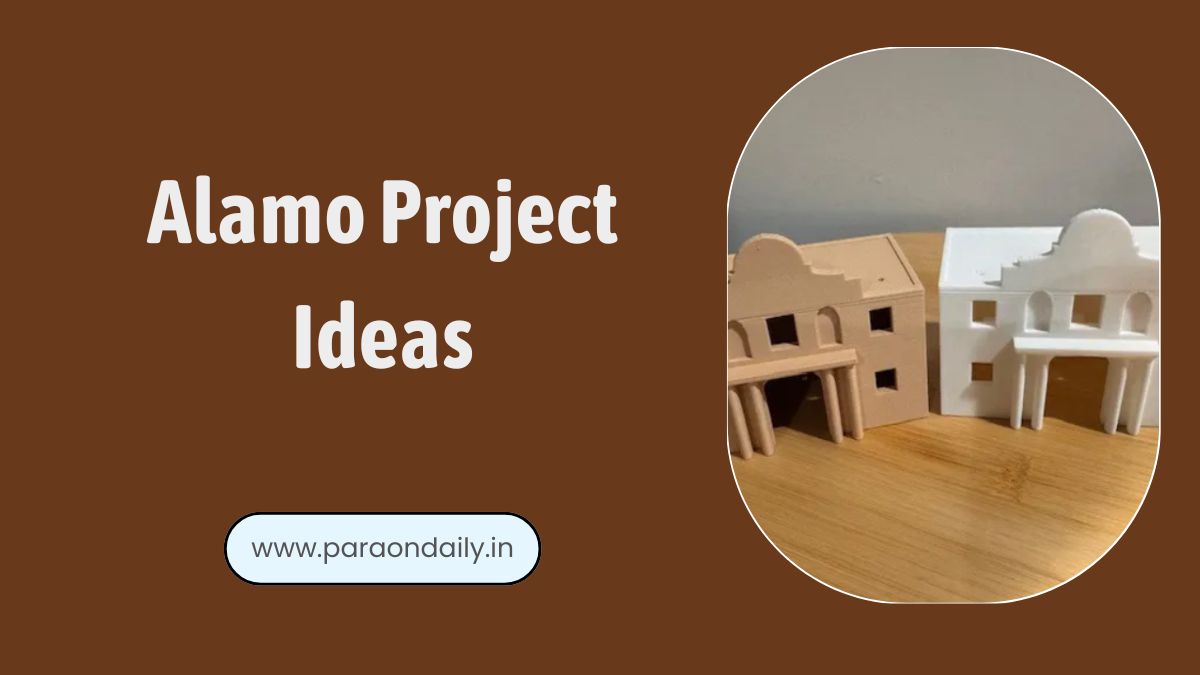
History becomes far more meaningful when you experience it instead of simply reading about it. The Battle of the Alamo, one of the most discussed events in Texas history, offers students and educators an excellent opportunity to explore courage, conflict, leadership, and cultural change through hands-on learning.
Whether you are a student preparing a classroom assignment, a teacher designing engaging activities, or a parent helping with a history fair, choosing the right alamo project ideas can turn a standard history task into an unforgettable educational experience.
The Alamo is not just a historic mission — it represents a turning point in the Texas Revolution of 1835–1836. According to the Texas State Historical Association, the 13-day siege ended on March 6, 1836, and became a powerful symbol of resistance that later inspired the Texian army at the Battle of San Jacinto.
In this blog, you will discover 100+ carefully curated project ideas that balance creativity with academic value. These projects encourage research, storytelling, critical thinking, and artistic expression while remaining practical enough for real classroom use.
Let’s begin by understanding why Alamo-based projects remain so effective in education today.
Why Alamo Projects Are Powerful Learning Tools
Strong history education goes beyond memorizing dates. It invites students to analyze events, understand perspectives, and connect the past to modern society.
Alamo-themed projects succeed because they:
Encourage critical thinking. Students evaluate causes, leadership decisions, and historical consequences.
Promote storytelling skills. The dramatic nature of the battle naturally supports narrative-based learning.
Support interdisciplinary education. Projects can combine history with art, engineering, writing, and technology.
Improve information retention. Studies in educational psychology consistently show that project-based learning increases long-term memory compared to lecture-only methods.
Most importantly, these projects help students see historical figures as real people who faced complex choices — not just names in a textbook.
Also read: Year Long Project Ideas
How to Choose the Right Alamo Project
Before jumping into the ideas, take a moment to select a project that matches your time, resources, and academic level.
Match the Project to the Grade Level
Elementary students benefit from visual and creative projects, while middle and high school learners can handle deeper research and analysis.
Focus on Accuracy
Because the Alamo involves real historical figures such as William B. Travis, James Bowie, and Davy Crockett, credible sources matter. Encourage the use of museums, academic websites, and history associations.
Balance Creativity With Research
A visually impressive project still needs factual support. Aim for both.
Plan Ahead
Some models and presentations require multiple days. Break the work into smaller steps to avoid last-minute stress.
Now, let’s explore the ideas that can transform a typical history assignment into something memorable.
100+ Alamo Project Ideas for Students and Educators
Below is a diverse collection of projects grouped loosely by style. Choose one that sparks curiosity — that’s always the best starting point.
Model and Diorama Projects
- Build a detailed Alamo mission model using cardboard.
- Create a 3D battlefield layout showing troop positions.
- Design a shoebox diorama of the final assault.
- Use LEGO to recreate the mission compound.
- Construct a clay model of the Alamo church.
- Build a light-up model highlighting key defense areas.
- Create a cross-section model explaining fortifications.
- Use recycled materials for an eco-friendly build.
- Design a miniature Texas landscape around the mission.
- Compare the Alamo’s original structure with today’s version.
- Create a pop-up paper model.
- Build a timeline-based diorama showing stages of the siege.
- Design a movable model with labeled parts.
- Recreate the Long Barrack in detail.
- Construct a model focusing on defensive weaknesses.
Research-Based Projects
- Write a research paper on the Texas Revolution.
- Analyze leadership styles during the battle.
- Study the role of Tejano defenders.
- Research the life of Davy Crockett.
- Examine William B. Travis’s famous letter.
- Compare Texian and Mexican military strategies.
- Investigate myths versus documented facts.
- Explore the political causes of the revolution.
- Study how the Alamo shaped Texas identity.
- Research weapons used during the siege.
- Analyze primary historical documents.
- Examine the role of communication in the battle.
- Research the experiences of civilians nearby.
- Study the aftermath leading to San Jacinto.
- Write a biography of James Bowie.
Creative Presentation Projects
- Create a documentary-style video.
- Design a museum-style exhibit board.
- Develop a narrated slideshow.
- Record a mock news report from 1836.
- Build an interactive digital timeline.
- Create a podcast episode about the battle.
- Design an infographic explaining key events.
- Produce a short educational animation.
- Create a virtual tour presentation.
- Develop a student teaching session.
- Design a historical website.
- Film a “day in the life” video.
- Create a battle strategy explainer.
- Present a comparison with other famous sieges.
- Build a QR-code-based exhibit.
Writing and Storytelling Projects
- Write diary entries from a defender’s perspective.
- Craft letters home from a soldier.
- Write historical fiction set during the siege.
- Create a children’s story about the Alamo.
- Compose a poem capturing the tension.
- Write a newspaper front page from 1836.
- Develop a script for a short play.
- Write a persuasive essay about the battle’s significance.
- Create a graphic novel outline.
- Retell events from a Mexican soldier’s viewpoint.
- Write an alternate-history scenario.
- Develop character sketches.
- Create a historical speech.
- Write a reflection on sacrifice and leadership.
- Compose a monologue for Davy Crockett.
Art and Design Projects
- Paint the mission at sunrise or sunset.
- Sketch a realistic battlefield.
- Design propaganda posters from the era.
- Create a mural timeline.
- Build a collage using historical images.
- Design period-accurate uniforms on paper.
- Sculpt key figures.
- Create a watercolor interpretation.
- Design commemorative stamps.
- Produce a symbolic art piece representing bravery.
- Create a map illustration.
- Design a textbook cover.
- Make a layered paper artwork.
- Craft silhouette portraits.
- Design an educational board display.
Interactive and Hands-On Projects
- Recreate a strategy board game.
- Host a classroom debate.
- Organize a mock trial analyzing decisions.
- Build a trivia challenge.
- Create a role-playing activity.
- Design flashcards for key figures.
- Develop an escape-room activity.
- Plan a historical reenactment.
- Create a decision-making simulation.
- Design a collaborative classroom map.
- Build a puzzle featuring the mission.
- Create a scavenger hunt.
- Develop a question-and-answer kiosk.
- Run a mini history workshop.
- Organize a panel discussion.
Advanced and High School-Level Projects
- Analyze the battle through military theory.
- Study supply chain challenges.
- Evaluate strategic mistakes.
- Compare historical narratives across textbooks.
- Research the role of morale.
- Examine cultural tensions.
- Conduct a historiography project.
- Study how films portray the Alamo.
- Analyze leadership communication styles.
- Create a research-backed thesis presentation.
- Explore international reactions at the time.
- Evaluate long-term geopolitical effects.
- Conduct a statistical casualty analysis.
- Study historical preservation efforts.
- Propose a modern museum redesign.
One excellent project completed with care often outperforms several rushed ones.
Tips for Creating an Outstanding Alamo Project
Even the best idea needs strong execution.
Start With Reliable Sources
Use museum archives, scholarly articles, and educational institutions to ensure accuracy.
Tell a Clear Story
Every project should answer an essential question — why does this event matter?
Make It Visually Engaging
Humans process visuals faster than text. Use diagrams, labels, and color thoughtfully.
Practice Your Presentation
Confidence can elevate even a simple project.
Edit Ruthlessly
Remove clutter. Clear communication always wins.
Common Mistakes to Avoid
Avoid these pitfalls to keep your project credible and impactful:
Relying on myths instead of verified facts.
Overloading the project with text.
Ignoring historical context.
Waiting until the last minute.
Choosing complexity over clarity.
Accuracy and thoughtful presentation build trust — both in academics and beyond.
Also read: Discuss Why Grade 11 Learners Should Have More Than One Career Options for Their Career Paths
Final Thoughts
Great history projects do more than earn grades. They build curiosity, research skills, and a deeper understanding of the human experience.
The best alamo project ideas challenge students to think critically while expressing creativity. They encourage learners to ask questions, evaluate decisions, and reflect on how past events continue to shape the present.
You don’t need the most elaborate design or the longest report to succeed. What matters is thoughtful effort, factual integrity, and a genuine desire to learn.
Choose a project that excites you, plan it carefully, and approach it with curiosity.
Because when history feels alive, learning stops being a task — and starts becoming an adventure.